
Dermal Filler
Restore. Balance. Enhance.
Dermal fillers are injectable treatments designed to restore volume, enhance facial contours and create subtle balance throughout the face. Treatment is highly individualized, taking into consideration your natural anatomy, proportions and aesthetic goals.
At Luminary, we believe injectable treatments should enhance-not change- the features that make you uniquely you.
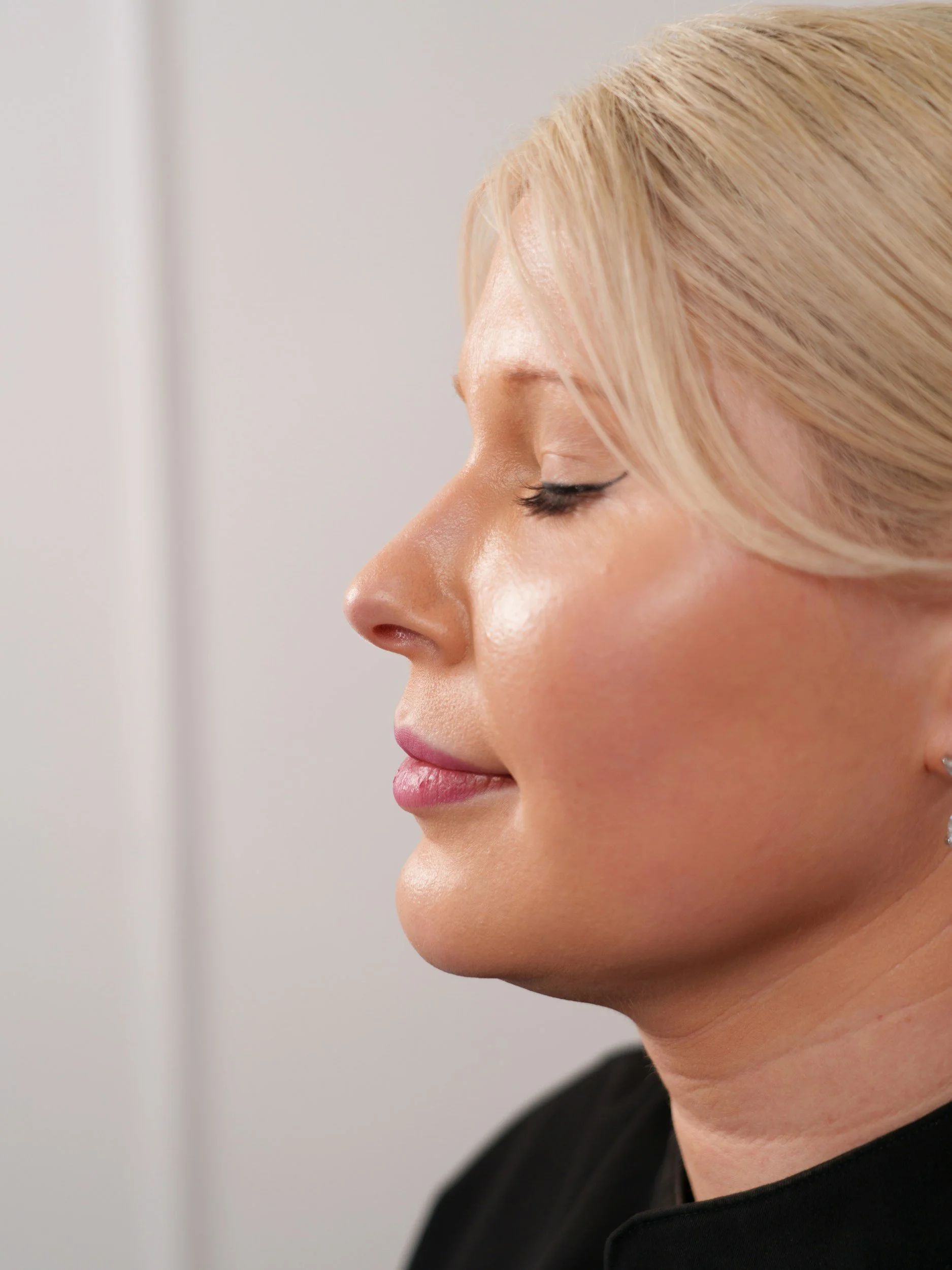
What is dermal Filler?
Dermal fillers are injectable gels commonly made with hyaluronic acid, a substance naturally found within the skin. Depending on the product and treatment area, filler may be used to restore volume, enhance contours or create greater facial balance.
Rather than focusing on a single feature, a thoughtful filler consultation considers the face as a whole.
What can dermal filler address?
Depending on individual anatomy, goals and clinical assessment, dermal filler may be considered for areas such as:
Lips• Cheeks • Chin • Jawline • Facial folds • Volume loss• Facial balancing
Not every area-or-every client- is appropriate for filler. A consultation with a qualified medical provider is essential to determine whether treatment is appropriate.

The Art of facial Balancing
It’s not about adding more. It’s about creating balance.
Facial balancing takes a comprehensive approach to aesthetic treatment, considering how individual features relate to one another rather than treating each area in isolation.
For some clients, subtle volume restoration or enhancement in carefully selected areas can create greater harmony while preserving the character of the face.
What to expect
Consultation
Your medical provider will discuss your goals, medical history and previous treatments while evaluating your facial anatomy and determining whether filler is appropriate for you.
Treatment
If treatment is recommended, the product amount and placement will be individualized to your anatomy and desired outcome.
After Treatment
Swelling, tenderness, redness and bruising can occur following dermal filler treatment. Downtime and aftercare vary depending on the product and area treated.
Results
Results and longevity vary considerably depending on the type of filler used, treatment area, amount injected and individual factors.
Frequently Asked Questions
-
Not when treatment is approached thoughtfully. Dermal filler can be used conservatively to restore volume, enhance natural features and create facial balance. The goal is a refreshed result that still looks like you.
-
There is no one-size-fits-all amount. The amount of filler recommended depends on your anatomy, treatment area, desired result and product being used. A qualified medical provider can create an individualized treatment plan during your consultation.
-
Most clients experience some discomfort during treatment, although many dermal fillers contain lidocaine to help improve comfort. Your provider may also use additional comfort measures depending on the treatment area and product.
-
Swelling is common after dermal filler and varies by treatment area and individual. It is often most noticeable during the first few days and gradually improves. Bruising, tenderness and redness may occur. Your provider will review what to expect and when to contact them if you have concerns.
-
Longevity varies depending on the product used, treatment area, and amount injected and individual factors. Some hyaluronic-acid fillers may last several months to well over a year, but results are temporary and individual experiences vary.
-
Many hyaluronic-acid fillers can be dissolved with an enzyme called hyaluronidase when medically appropriate. Not every type of dermal filler is dissolvable, which is one reason it’s important to know which product is being used and to be treated by a qualified medical provider.
-
A consultation is the best place to start. Your provider will evaluate your anatomy, medical history, concerns and goals and discuss whether dermal filler-or another treatment option-is appropriate for you.
Education comes first.
Choosing an injectable treatment should begin with understanding your options. A qualified medical provider can evaluate your anatomy, discuss your goals and determine whether dermal filler-or another approach-is appropriate for you.